
Research for Advocacy

ywata

Standing on the Graves: Unmasking the Plight of West Africa’s Persecuted Christians

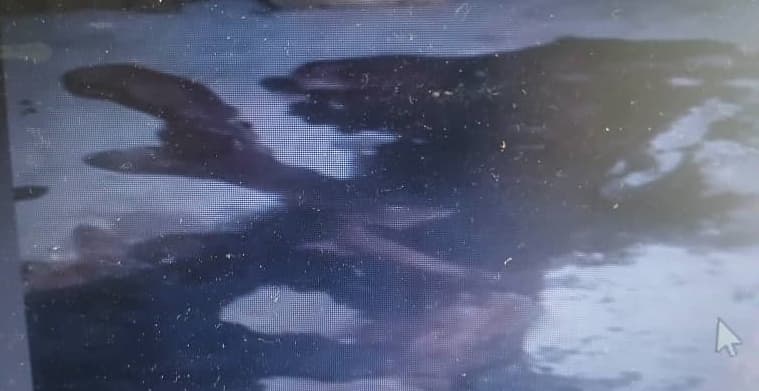
Volume 1, Number 2 In June and July 2025, West Africa witnessed a distressing surge in violence, particularly against Christian communities. One of the most heart-wrenching episodes occurred in Yelewata, Benue State, Nigeria, where a coordinated night attack by Fulani herdsmen spanned from 10:30 pm to 3:00 am on Saturday, June 14. Yelewata, a predominantly Christian farming community, became the latest victim of a pattern that has now become painfully familiar across Nigeria’s Middle Belt and beyond. Over 200 individuals were reportedly killed, including a young pharmacy graduate. Eyewitnesses recounted how the attackers chanted “Allahu Akbar” while burning down homes and food stores worth over ₦27 million—deliberately targeting the people’s source of livelihood. While the Nigerian Inspector General of Police cited 47 deaths and 100 displacements, local activists and survivors provided much higher figures. Bodies were found charred in homes, on the streets, and even in churches. In one house alone, 40 people were slaughtered. In another, 30 people lost their lives.  What was found at daybreak was a flood of blood in some houses. Pregnant women and the elderly were not spared. Photo of a blood flood in one of the houses attacked. Credit: Verydark man video with eyewitnesses, June 2025 This atrocity is not isolated. The Fulani herdsmen crisis has evolved from spontaneous clashes into what survivors now see as systematic, militarised, and religiously motivated terror. The protesters in Benue were clear in their message. “We are standing on the dead bodies of our mothers, children and fathers,” cried Mimidoo Williams, one of the protest leaders. She added that more than 5,000 people had been displaced in Benue alone since 2024. Protesters carried rosaries, held placards, and wept publicly. Some walked with women and children who were left homeless and traumatised. This pattern of violence is not limited to Nigeria. In Mali, the national army recently claimed victory against jihadists by capturing a key ISIS leader. Similar stories of Islamist violence have emerged from Burkina Faso, where Christian villages have been attacked, and Niger, where churches have been torched. The spread of jihadist groups in the Sahel and the weakening of state authority have made Christians and religious minorities easy targets. Photo of a man burnt beyond recognition in the Benue killing attack. Credit: Very dark survivor’s visit Why is Benue, in particular, under constant siege? Two key reasons emerge: religion and land. Benue is Nigeria’s “food basket,” with vast fertile lands that support a thriving farming economy. It is also one of the states with the highest Christian population in the country. Survivors insist that the attacks are both an economic conquest and a religious persecution. Despite warnings issued by the Fulani herdsmen before the attacks, security forces failed to respond decisively. Civil society figures such as human rights activist “Very Dark Man” visited Yelewata, confirming the scale of the massacre and amplifying survivor testimonies. His footage documented the mass destruction, confirming that women, children, and pregnant mothers were not spared. As the region mourns, one truth rings clear: the blood of West Africa’s innocents is crying out for justice. Until there is a robust national and international response, Christian communities in Nigeria and across the region will continue to pay with their lives. By: Godwin Adeboye

Standing on the Graves: Unmasking the Plight of West Africa’s Persecuted Christians Read More »
where is the police (1)

Where Is the Police?

Volume 1, Number 1 When the night burned and no one came, a village was left to bury its own. On the midnight of Sunday, April 13, 2025, Kwall, a small town in Bassa Local Government Area of Plateau State, Nigeria, became a furnace of flames and fear. Surrounded in the dark by armed men—believed to be Fulani militia from the nearby Kaduna border—villagers awoke to a siege they could not escape. By dawn, 52 Christians lay dead. Bodies charred, food barns torched, families wiped out in their sleep. As the community gathered to bury their dead in a mass grave on April 15, there was one haunting question: Where were the police? The speech made by Mr Kayode Egbetokun while on condolence visit to Plateau state governor suggests that the Police force may not have adequate man power at the moment. The usual situation has been that police have been absent to confront the attackers during attacks. The attack on Kwall in the early hours of Sunday, April 13, 2025, was a highly coordinated and methodical assault carried out under the cover of darkness. According to eyewitness accounts, the assailants—suspected Fulani militias—approached the village from multiple directions, strategically encircling the community to block all possible escape routes. Once the town was surrounded, they launched their assault by setting homes ablaze, many of which still had sleeping families inside. The invaders targeted not only residential structures but also essential survival infrastructure: food barns, grain reserves, and small shops were deliberately torched. This left the surviving community in utter devastation, not only mourning the loss of lives but also stripped of their means to feed themselves. In the aftermath, children could be seen scavenging through the rubble for scraps of food, while mothers resorted to boiling wild leaves to feed their infants. The tactical nature of the attack—surround, incinerate, and starve—suggests a calculated effort not just to kill but to destroy the community’s ability to recover. Bullet Hole on the wall. Photo Credit: Awoyemi Emmanuel Oluwaseunayo, Theo-sight Media This massacre was not the first. Nor was it random. Over the years, Irigwe Christians have faced recurring attacks that follow a clear pattern—coordinated, militarized, and executed with precision. Survivors say the attackers spoke Fulfulde. Some came through the thick bushes bordering Kaduna. No boundaries. No police posts. No protection. “I locked my four children in the room when I saw the fire,” said one mother, now a widow. “When I came back, I found them hugging each other. Burnt.” Eyewitnesses describe a practice of abandonment. The military base nearby remained unresponsive. No gunshots fired. “They told us there was no order to intervene,” one man said, tears tracing his ash-covered face. Speaking to one of the victim’s wives who is Pregnant. Photo Credit: Awoyemi Emmanuel Oluwaseunayo, Theo-sight Media Two days after the attack, Governor Caleb Mutfwang visited Kwall. Standing before the community, he apologized. “I am sorry this happened,” he said. But sorrow cannot replace justice. There have been no known arrests. No known investigation. Just silence. The community women who lost their husbands and children cried with no hope of stopping as they saw the governor. The scene was horrible. Beneath the silence is a strategy. Locals say this violence is not only religious—it is territorial. Fertile Irigwe land is the prize. “They want to frustrate us so we leave,” said an elderly man. “But this land carries our ancestors’ bones.” In the absence of state protection, theology steps in. The mass grave becomes a sacred space—a site of martyrdom. But theology must not become resignation. It must be resistance. This is where reframing matters. These are not just victims; they are witnesses. Their graves tell a story Nigeria refuses to hear. We must reframe the silence—not as absence but as indictment. We must ask: who benefits from erasure? Who writes the headlines? Who names the martyrs? As Nigeria prepares for the 2027 elections, we must ask every candidate: Where were you on April 13, 2025? Where are the police? To prevent further tragedies like the Kwall massacre, two urgent practical steps must be taken. First, a functional police post must be established in Kwall, supported by a community-based policing model. The complete absence of security infrastructure in the town enabled the attackers to act with impunity. Locally trained personnel who understand the terrain and community dynamics could respond swiftly to threats and build trust with residents. Second, there is a pressing need for clarification of the boundary between Plateau and Kaduna States. Kwall’s geographic position at the intersection of both states has turned it into a lawless buffer zone. Attackers exploit this jurisdictional grey area, crossing state lines with ease and escaping accountability. Clear boundary demarcation, interstate cooperation, and the deployment of joint security task forces are essential to sealing off safe routes used by criminal groups. Children who lost their parents and shelter. Photo Credit: Awoyemi Emmanuel Oluwaseunayo, Theo-sight Media Beyond security infrastructure, both theological and community-level responses must be strengthened. Ecclesial advocacy should lead the way. Churches must convene national synods that focus explicitly on the protection and safety of rural Christians and their communities. Collaborations with international Christian bodies can unlock resources for security, relief, and legal support. Local vigilante teams already active in many villages should be equipped, recognized, and legitimized by law. Ethical documentation is equally critical—there must be a coordinated effort to preserve the memory of victims and martyrs through national archives, and digital platforms that resist erasure. Additionally, survivor support, particularly for widows and children, is a moral and humanitarian imperative. Tailoring training programs, Mobile training programs, trauma counseling, and micro-grants for small businesses can empower these women to rebuild their lives with dignity. Finally, the Church must embrace a theology of resistance—training pastors to interpret suffering as a call to resilient faith, and incorporating such theology into seminary curricula. Hope must be preached not as escapism but as spiritual defiance against systems that aim to silence and exterminate. The massacre in Kwall is not merely a security failure. It is a spiritual, humanitarian, and national emergency. It poses urgent questions: Who

Where Is the Police? Read More »